What to Include in a Tree Service Contract: 9 Essentials

Last Updated: October 27, 2026
Quick Summary
A tree service contract should include a written estimate that names each tree and the specific work, clear scope language, the total price and payment schedule, cancellation and change order terms, proof of insurance and licensing, damage responsibility, and cleanup and debris disposal terms. Signed before work begins, it turns verbal promises into terms both sides can check.
Name every tree in the written estimate rather than accepting "tree work as needed.
Request a certificate of insurance and verify it by calling the carrier directly.
Document pre-existing damage with photos and attach them to the contract.
Confirm who calls 811 and who pays if a private line is damaged.
Specify cleanup standards, such as branch diameter limits and debris removal responsibility.
Table of Contents
Hiring a tree service without a written contract is one of the most common ways homeowners end up in a dispute.
A tree service contract is a written agreement between the property owner and the contractor that defines the scope, price, schedule, and responsibilities for the job.
Here is why it matters:
It sets clear expectations. Both parties agree on exactly which trees are included.
It protects your property. Damage responsibility is stated before work begins.
It creates a record. If something goes wrong, you have documented terms to point to.
Many homeowners assume a handshake deal is enough. In practice, memory fades and details drift. A short written document keeps everyone on the same page.
Start With a Written Estimate and Clear Scope of Work
Before you sign anything, request a written estimate. A good estimate lists each tree by location, size, and species when known, along with the specific work to be done. For a broader overview of tree removal services in Iowa, including costs, permits, and emergency response, you can read our guide before requesting an estimate.

Ask the contractor to include:
Customer and contractor names and contact details
The address and work location on the property
Each tree to be trimmed, removed, or ground
Watch out: a vague estimate that says "tree work as needed" invites disagreement later. Insist that every tree is named.
Scope Language for Trimming, Removal, and Stump Grinding
Scope language is where most disputes begin. Each type of work needs its own clear wording.
Example trimming scope: "Crown thin the oak tree at the rear property line by removing dead, crossing, and rubbing branches up to 2 inches in diameter. Raise the canopy to 10 feet above the driveway."
Example removal scope: "Remove the maple tree in the front yard, fell it in a controlled manner, and cut the trunk into sections no longer than 8 feet."
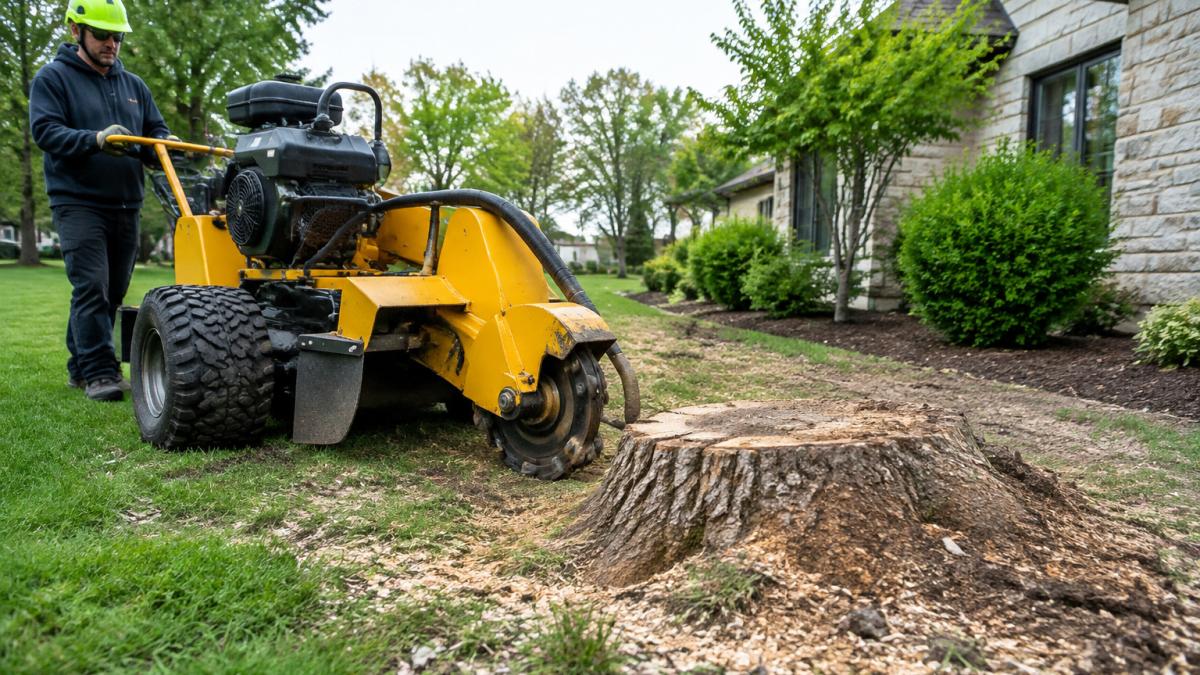
Example stump grinding scope: "Grind the stump to a depth of 12 inches below grade and backfill the hole with wood chips."
Specific wording like this tells you exactly what the crew will do and what they will leave behind.
Price, Payment Schedule, Deposits, and Cancellation Terms
Pricing depends on the number of trees, their size, access, and the work involved, so the contract should state the total clearly. Ask whether the price is fixed or billed by the hour.
Common payment terms to look for:
Deposit: Some contractors request a deposit before scheduling. Confirm the amount and whether it is refundable.
Payment schedule: Large jobs may be split into milestones, such as after removal and after cleanup.
Accepted methods: Check whether the company takes checks, cards, or bank transfers.
Also note whether the contract covers change orders. If new work is needed mid-job, the agreement should require your written approval before the price changes.
Insurance, Licensing, and Proof of Insurance
Insurance is the single most important protection in any tree job, because tree work combines heavy equipment, heights, and falling wood. A contract that names insurance without proving it is worth little. The agreement should require the contractor to furnish proof before work begins, and you should verify that proof yourself.
The documents to request
Ask for a certificate of insurance (often called a COI) issued by the contractor's insurance agent or carrier, not a photocopy of a policy declaration page the contractor typed up. The COI should show:
General liability coverage with the policy number, effective dates, and limits. This pays for damage to your home, fence, driveway, or a neighbor's property.
Workers' compensation coverage with the policy number and effective dates. This covers injuries to crew members. If a worker is hurt on your property and the contractor has no workers' comp, the cost can come back to you.
Commercial auto coverage if the company's trucks and trailers will be on your property.
How to verify coverage, not just collect paper
Call the carrier, not the contractor. Use the phone number printed on the certificate, not a number the contractor gives you, and ask whether the policy is active on the date of the job and whether the limits match the certificate.
Check the effective dates. A certificate that expired last month proves nothing. Confirm the policy runs through your scheduled work date.
Ask about additional insured status. For larger jobs, request that your property be named as an additional insured on the general liability policy. This gives you direct standing if a claim arises.
Confirm the crew is covered. Ask whether the workers on your job are employees covered by the company's workers' comp policy or subcontracted. If subcontracted, ask for the subcontractor's own certificate.
Watch Out A certificate of insurance is evidence that coverage exists, it is not a guarantee that a claim will be paid. To understand what tree removal insurance coverage actually includes, review coverage details before relying on any certificate. Confirm the policy is active by phone before the crew arrives, and keep a copy with your signed contract. If you want a detailed walkthrough, learn how to verify tree service insurance step by step before you sign.
Licensing and arborist credentials
Tree service licensing rules vary by state and locality, so ask the contractor which license or registration applies to your address and request the license number. You can then confirm it through the issuing state or local agency. Separately, ask whether the person supervising the work holds a credential from the International Society of Arboriculture (ISA), such as Certified Arborist or Tree Risk Assessment Qualification, and confirm the credential through ISA's public credential lookup.
What the contract should say about insurance
Include a clause stating that the contractor carries general liability and workers' compensation coverage, that proof will be provided before work starts, and that the contractor will maintain coverage for the duration of the job. If the contractor cannot produce a certificate, treat that as a reason to pause, not a paperwork detail to sort out later.
Property Protection, Cleanup, and Debris Disposal
Most tree-service disputes are not about whether the tree came down, they are about what the yard looked like afterward and who pays for the ruts, the broken fence, or the stump left behind. The contract should settle those questions in writing before the first cut. This is the section where a homeowner-friendly contract separates itself from a generic form.
Document pre-existing conditions before work begins
Walk the property with the contractor before the job and note existing damage: cracks in the driveway, a leaning fence post, bare spots in the lawn, a cracked window, or a sprinkler head already broken. Photograph those conditions and attach the photos to the contract as an exhibit. This protects both sides, the contractor cannot be blamed for damage that already existed, and you have a baseline if a dispute arises.
Set measurable cleanup standards
The phrase "clean up all debris" is too vague to enforce. Ask for cleanup language with boundaries, for example:
Branches and brush: "All branches and brush larger than 1 inch in diameter will be removed from the property and disposed of by the contractor."
Logs: "Trunk sections will be cut to 16-inch lengths and stacked at the curb", or "hauled away", whichever you and the contractor agree to.
Sawdust and chips: "Sawdust will be raked from the lawn and driveway; wood chips from stump grinding will be backfilled into the stump hole unless the customer requests removal."
Final walkthrough: "The contractor will walk the property with the customer at completion and remove any remaining debris identified at that time."
Specific numbers and locations turn a promise into something you can check at the end of the job.
Utility locating and underground protection
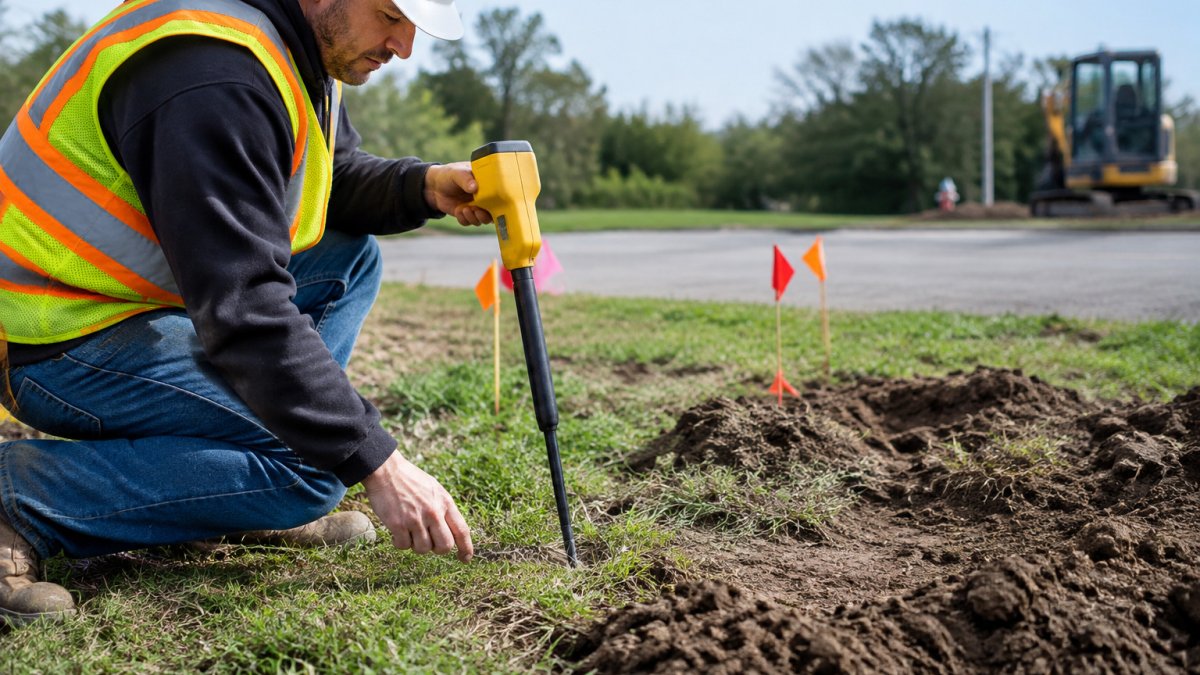
Before any digging, stump grinding, or root work, underground utilities must be marked. In most states, the free 811 call-before-you-dig service marks public lines, gas, electric, water, sewer, and communications, but it typically does not mark private lines on your side of the meter, such as irrigation systems, landscape lighting, septic lines, or private electric runs to a shed. The contract should state:
Who is responsible for calling 811 and when (usually the contractor, several business days before work).
That the customer will identify private lines and irrigation heads on the property.
Who pays for repairs if a marked or disclosed line is damaged, and who pays if an unmarked private line is hit.
Pro Tip Take photos of your irrigation heads, landscape lighting, and septic cleanouts and attach them to the contract. A crew that knows where the private lines run is far less likely to hit one. For more practical steps, see our guide to protecting your home during tree removal.
Damage responsibility and restoration
The contract should assign responsibility for damage to lawns, landscaping, fences, driveways, siding, and roofs. Look for language that states:
What the contractor will repair or pay for if equipment damages the lawn, driveway, or fence.
Whether the contractor will use mats or plywood to protect turf and driveways on soft ground.
Whether the contractor is responsible for damage caused by falling limbs to structures the customer did not identify as at risk.
How pre-existing damage (documented in the exhibit) is excluded from the contractor's responsibility.
Debris disposal and hauling
Confirm in writing whether debris is hauled off site or left on the property, and who pays any disposal or dump fees. If wood chips or firewood will be left, state where they will be placed. If the contractor will haul everything away, state that the price includes disposal. These details are cheap to write down and expensive to argue about later.
Using a Tree Service Contract Template and Checklist Before You Sign
A simple checklist helps you review any tree service contract before you sign. Confirm that it includes:
Written estimate with each tree listed
Clear scope language for trimming, removal, and stump grinding
Total price, payment schedule, and deposit terms
Cancellation and change order terms
Many contractors provide a standard template. If the one offered is missing any item above, ask for it to be added. Keep a signed copy for your records.
Booking Your Tree Work With Anderson Tree Care
Ready to move forward? Call or text us today for an estimate.
Frequently Asked Questions
What should a tree service contract include?
A solid tree service contract names both parties, describes the work location and each tree involved, and spells out the scope, such as trimming, removal, stump grinding, and cleanup. It should list the start date, expected completion timeframe, total price, and payment schedule. It also needs insurance and workers' compensation details, a statement of who is responsible for property damage, and the terms for cancellation or changes. Signatures from both parties make the agreement enforceable.
Should a tree service provide a written estimate or contract?
Yes. A written estimate describes the proposed work and price before you commit, while the signed contract makes that agreement binding. Ask for the estimate first, compare it against the scope of work, and confirm that the final contract matches it. If the contractor offers only a verbal quote, treat that as a warning sign and request the details in writing before any work begins.
Should a tree service contract include proof of insurance?
Yes. Request a current certificate of insurance that shows general liability and workers' compensation coverage, and contact the insurer directly to confirm the policy is active. Note the policy dates in your contract so you can verify coverage was active for the entire job.
What should a tree removal contract specify?
A tree removal contract should identify each tree by location and approximate size, state whether the stump will be ground down, and describe how far below grade grinding will go. It should say who handles permits, how debris and logs will be removed, and who is responsible if underground utilities, pipes, or irrigation lines are damaged. Including these details prevents disagreements once the crew arrives on site.

Comments