How to Identify Underground Utility Lines Before Digging

Last Updated: November 4, 2026
Quick Summary
Call 811 at least a few business days before digging so local utility companies can mark their underground utility lines at no cost. Then learn the standard marking colors, dig by hand inside the tolerance zone, and hire a private locator for lines that 811 does not mark.
Call 811 or submit a request through your state's one-call center before any digging.
Red marks indicate electric power lines and yellow marks indicate gas, oil or petroleum lines.
Hand dig inside the tolerance zone and dig at a shallow angle near any marked line.
Private lines like irrigation, septic and outdoor lighting are often not marked through 811.
Stop work and call 911 for gas leaks or downed power lines if you hit a line.
Table of Contents
Why Identifying Underground Utility Lines Matters Before You Dig
A simple digging job can turn dangerous quickly when buried lines are not located first. Our article on dangers of DIY tree removal near power lines explains the hazards in more detail.
Underground utility lines run beneath most yards, driveways and sidewalks. You often cannot see them from the surface. A shovel, auger or stump grinder can reach them in seconds.
Here is why this step matters:
Safety: Gas and electric lines can cause fires, explosions or electrocution.
Service: Damaged water and communication lines can interrupt service for your whole street.
Cost: Repairs and fines can add up quickly, and you may be held responsible.
Many people assume they know where their lines are. Lines move over time, and older installations may not match any map you have. Always verify before you dig.
Step 1: Call 811 Before You Dig
The simplest way to start is to call 811, the national "Call Before You Dig" number in the United States (811 Before You Dig).
Here is how the process usually works:
Call 811 or submit a request online through your state's one-call center.
Give the location, the start date and the type of digging planned.
Wait for the marking deadline, which varies by state.
Confirm that every participating utility has marked its lines.
Do not skip this step, even for small jobs. Shallow digging can still reach a line in some yards.
Watch out: Marks are only valid for a limited time. If your work runs past the marking window, call again before you continue.
Step 2: Understand Underground Utility Line Marking Colors
Utility companies use standard colors to mark buried lines. Learning the colors helps you understand what is under the ground before you start digging.

Color | Utility Type |
Red | Electric power lines |
Yellow | Gas, oil or petroleum lines |
Orange | Communication, cable or fiber lines |
Blue | Potable water lines |
Green | Sewer and drain lines |
White | Proposed excavation area |
Pink | Temporary survey markings |
Purple | Reclaimed water or irrigation lines |
When you see flags or spray paint, read them carefully. A line marked in yellow or red needs extra caution. Keep your digging distance from the marks, and hand dig close to them.
Step 3: Locate Private Utility Lines That 811 Does Not Mark
Not every line gets marked through 811. The one-call system covers member utilities, typically the electric, gas, water, sewer, and telecom operators that pay into it. Lines installed by a homeowner, a previous owner, or a contractor working for them usually are not members, so no ticket will ever flag them. These private lines cause the most surprises because the 811 clearance can come back clean while a live irrigation circuit or a septic lateral sits inches below the proposed dig.
Common Private Lines Homeowners Overlook
Irrigation and sprinkler mains, valves, and lateral runs
Private septic lines, drain fields, and tank lids
Outdoor lighting and low-voltage landscape cable
A common mistake is treating a clean 811 ticket as proof the whole lot is clear. It is not. The ticket only speaks to member facilities.
Start With Records Before You Pay for a Locator
Before hiring anyone, pull what already exists. Records narrow the search area and often reveal the depth and material of a line, which changes how you dig near it.
Closing documents and the seller's disclosure. Many sales packages include a site plan or a plat showing utility easements and the septic layout.
Permit history at the local building department. Irrigation, pool, and septic permits usually include a sketch of what was installed and where.
The installer. Irrigation and fence companies frequently keep as-built sketches or at least a service record tied to the address.
If the records conflict or are missing, assume the line is present until a locator proves otherwise.
How Private Locating Actually Works
A private locator uses the same physics the utility crews use, just applied to your side of the meter. The two workhorses are electromagnetic locating and ground-penetrating radar.
Electromagnetic (EM) locating works on conductive lines, energized electric, tracer wire on plastic pipe, or a metal pipe itself. The technician connects a transmitter directly to the line, or induces a signal from the surface, then walks a receiver to trace the path and estimate depth. It is fast and accurate on metal and traced plastic, but blind to plastic pipe with no tracer wire.
Ground-penetrating radar (GPR) sends a radar pulse into the soil and reads the reflection off buried objects. It finds non-conductive plastic, concrete, and tanks, but its depth reach shrinks in clay-heavy or saturated soil and it struggles around rebar and chain-link.
The two methods are often used together: EM traces the run, GPR helps confirm what EM cannot see. Ask the locator which method they will use and whether they will mark depth, not just a paint line. A mark with no depth is only half a locate.
What a Private Locate Should Deliver
A useful private locate is not a few flags in the yard. Ask for:
Paint or flags along the full run, with depth called out at intervals
A sketch or photo log you can keep and hand to your contractor
A written statement of what was searched for and what was found, and, just as important, what could not be confirmed
That last item matters. If the locator cannot confirm a line, the safe assumption is that it is there and shallow until proven otherwise.
Watch out: A private locator's mark is only as good as the records and access they were given. If a line runs under a locked shed, a deck, or a parked vehicle, tell the locator before the visit so they can plan around it, an inaccessible line often goes unmarked and then gets hit.
When You Cannot Confirm a Private Line
If records are missing and a locator cannot resolve a run, do not default to a power tool. Hand dig with a blunt-nosed shovel at a shallow angle, or use a vacuum excavation service to expose the line safely.
Keep your private locate marks and sketch with the job file. If the project stalls and resumes weeks later, the paint will be gone and the sketch is the only record you have.
Safe Digging Practices Near Utility Lines
Once lines are marked, your digging technique matters. Many accidents happen during the last few inches of digging, after the machine has already done the easy work and the operator is impatient to finish.
Understand the Tolerance Zone
The tolerance zone is the band of soil around a marked line where you must stop using powered equipment and switch to hand tools. The width is set by state law or by the one-call center's rules, and it is usually measured from the outside edge of the mark, commonly 18 to 24 inches on each side, though some states use a different figure.
Inside the tolerance zone:
Hand dig with a blunt-nosed shovel, never a spade or pick
Dig at a shallow angle so the blade rides over a pipe or cable rather than through it
Probe gently to find depth before you commit to a trench line
Outside the tolerance zone, mechanical excavation is generally allowed, but the marks still govern where you can and cannot cut.
Sequence the Work Around the Marks
A safe dig is planned, not improvised. The order that works:
Confirm the marks are current and complete. Walk the ticket against the paint. If a utility did not mark, call 811 and request a re-locate before any equipment moves.
Mark the tolerance zone on the ground. A second color of paint or a line of stakes makes the hand-dig boundary obvious to everyone on site, including the machine operator.
Excavate outside the zone first. Remove the easy soil with the machine, then step back and hand dig the last stretch into the zone.
Expose, do not strike. When you reach a line, uncover it fully along the work area so you can see its path and depth before you dig beside it.
Adapt the Rules to Stump Grinding and Root Work
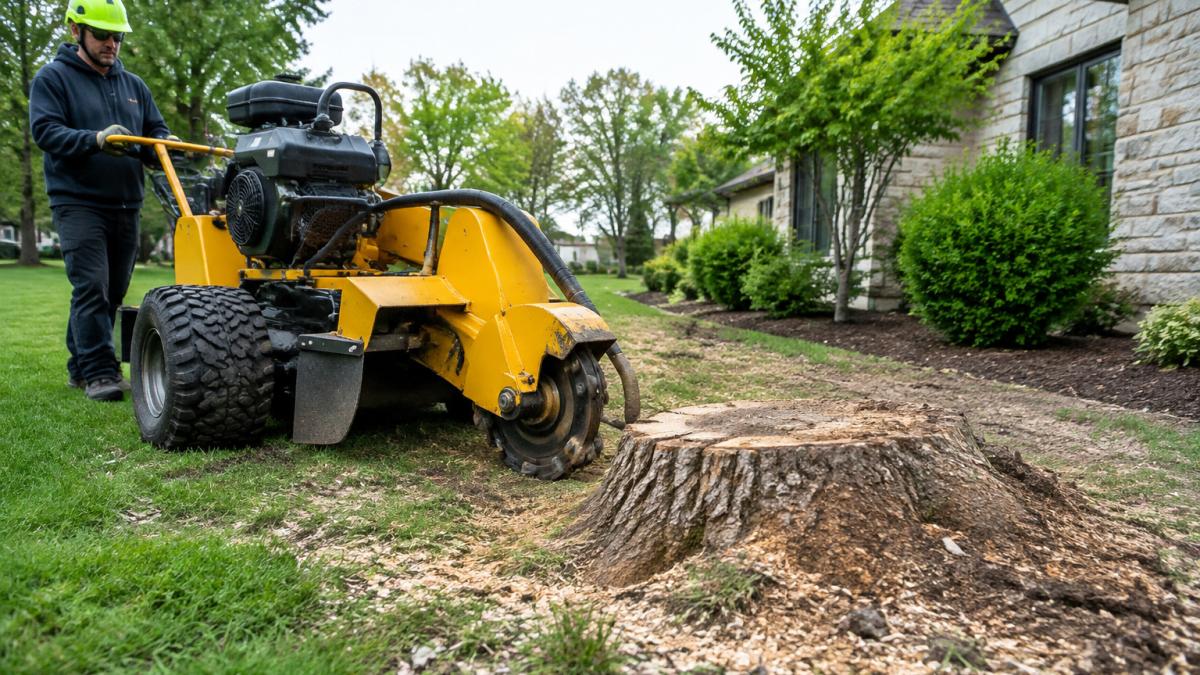
Stump grinding is a special case because the cutter head works below grade and throws debris, and because large roots often run parallel to utility trenches. A grinder can reach a line the shovel never would.
Treat the grinder's cutting path like a trench: hand dig or probe the tolerance zone before the wheel goes in.
Grind to a depth that stops above any marked line, and confirm the line's depth with the locator or by hand exposing it.
Keep the grinder's discharge away from flags and paint so the marks survive the job.
Watch out: Marks fade, get buried by spoil, or wash out in rain. If the paint is gone before you finish, stop and request a re-locate, do not dig on memory.
Protect the Marks and the Record
Photograph the marked area before work starts, including the flags, the paint, and any depth notes the locator left. Keep the photos with the job file. If a line is damaged later, the photo record shows what was marked and when, which matters for both safety and liability.
What to Do If You Hit a Line
If a tool contacts a line, stop immediately. Do not try to move the line, cover it, or repair it yourself. Move people away, call 911 for gas or downed electric, and report the damage to the utility and the one-call center. Even a small nick in a cable or pipe can fail later, after the trench is backfilled and everyone has gone home.
What to Do If Marks Are Unclear or You Hit a Line
Sometimes marks fade, disappear or do not match what you find. If that happens, stop digging and call 811 again to request a new locate.
If you hit a line, follow these steps: Learn the critical signs a tree needs emergency removal if damage leaves a tree unstable afterward.
Stop all work right away.
Move everyone at least 100 feet away from the area if you smell gas or see sparks.
Call 911 for gas leaks or downed power lines.
Report the damage to the utility company and your local one-call center.
Do not try to repair or cover a damaged line yourself. Even a small nick can cause a delayed failure.
Scheduling Your Next Tree Project Safely With Anderson Tree Care
Planning a tree removal, trimming or stump grinding project near buried lines takes preparation. Anderson Tree Care is fully insured and licensed, and we have more than a decade of experience working around residential properties in West Des Moines and surrounding areas.
Before booking any tree work, make sure your contractor asks about underground utilities and confirms the locate status.
Call or text Anderson Tree Care today for an estimate.
Frequently Asked Questions
How do I find out where underground utility lines are before digging?
The most reliable starting point is calling 811, the free national number that routes your request to local utility companies. Provide the exact address and planned dig location, and the participating utilities will send locators to mark their lines, typically within a set timeframe. Marking is free for the homeowner. Lines on private property, such as yard lights or irrigation feeds, are generally not covered, so those need a separate private locate before work begins.
How far in advance should I contact 811 before digging?
Contact 811 at least a few business days before you plan to dig, and check your state's required notice period, since requirements vary. Check your state's notice requirements, and submit the request well ahead of your project date so locators can respond. Tickets typically remain valid for a limited period, so if your project is delayed, confirm the ticket is still active or submit a new request.
Does calling 811 locate every underground line on my property?
No. Calling 811 covers utility companies that are members of the one-call system, usually gas, electric, water, sewer, and telecommunications lines in the public right-of-way and connected to their networks. Lines owned by the homeowner or private contractors, such as decorative lighting, irrigation lines, and detached garage power, typically are not marked. Hire a private utility locator or ask the homeowner's records to identify those before digging.
What should I do if utility marks are unclear or missing?
Stop digging and contact 811 again to request a remark or a re-locate. Do not assume an unmarked area is safe. If the marks have faded or been disturbed, the locator can refresh them. Keep your ticket number handy and document any discrepancies with photos so you have a record if questions arise later.


Comments