Factors Affecting Stump Grinding Equipment Access on Your Property

Last Updated: November 4, 2026
Quick Summary
Stump grinding equipment access depends on whether the machine can physically reach the stump, which is decided by the route to it, the working space around it, and the ground along the way. Gate width, machine chassis size, overhead clearance and soil condition are the factors that most often block a job.
Measure the clear opening of the narrowest gate, not just the gate frame.
Compare the machine's overall width, including wheels and hitch, against that clear opening.
Check overhead clearance for low branches, pergolas and utility lines along the tow route.
Protect soft lawns with plywood or turf mats along the travel path and at the stump.
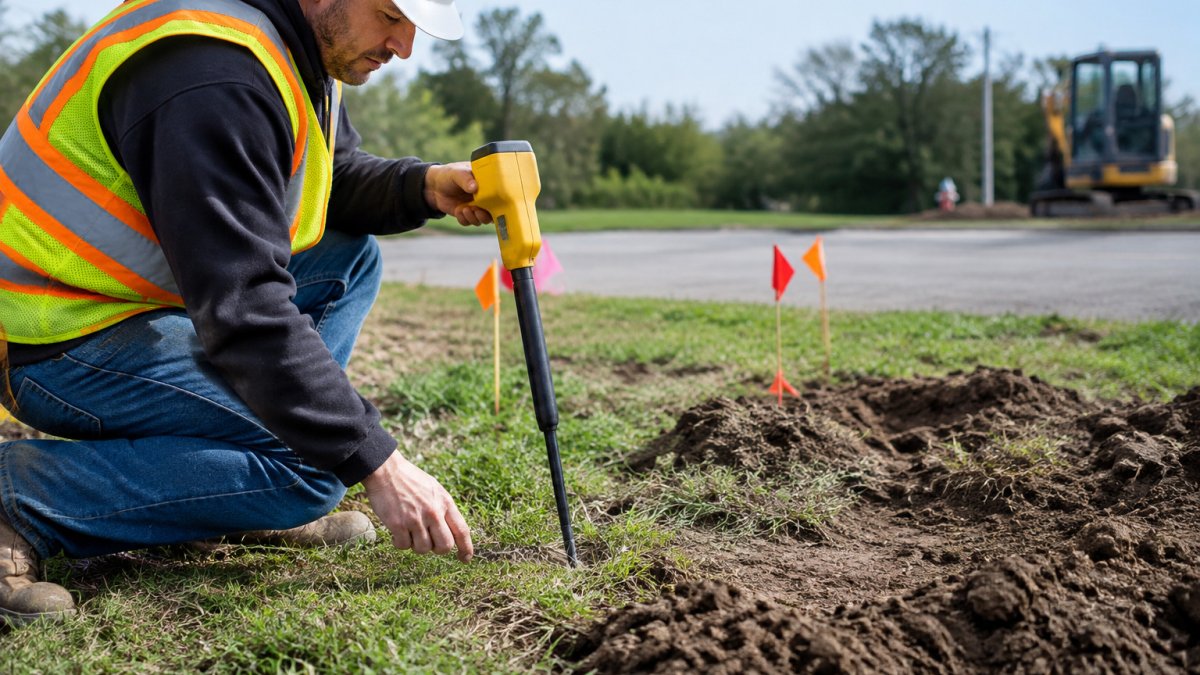
Call 811 for a utility locate and treat any overhead line as a hard stop.
Table of Contents
Why Access Decides Which Stump Grinder Can Reach Your Stump
Before asking what a stump grinding job costs, ask whether the machine can physically reach the stump, because stump grinding equipment access decides more jobs than anything else.
Access problems come down to three things: the path the equipment must travel, the space it needs to work, and the ground it must cross. A machine that fits one yard may not fit another, which is why access matters before anything else.
The path from the street to the stump
The working space around the stump
The ground condition along the entire route
Understanding Stump Grinder Dimensions and Gate Width Limits
Equipment size is the first thing to check for stump grinding equipment access, and it is where most access plans fail. Walk-behind grinders are compact and fit many residential gates. Self-propelled and tow-behind units offer more cutting power but need more room at every pinch point.
Gate width is the most common surprise. Homeowners measure the opening and assume the machine will pass, but the real question is whether the frame, wheels, and attachments clear it with room to spare.
Gate width versus machine chassis width
The gate opening and the machine's chassis width are two different numbers, and the gap between them is where jobs get rescheduled. Use this mapping as a starting point when you compare a property's narrowest gate to a machine class.
Machine class | Typical chassis/overall width | Minimum gate clearance to plan for | Typical access profile |
Compact walk-behind (e.g., 13-25 hp class) | About 26-30 in | 32-36 in clear opening | Fits most residential side gates; can be hand-guided through tight runs |
Mid-size walk-behind (e.g., 25-35 hp class) | About 30-36 in | 36-42 in clear opening | Fits wider side gates and double gates; needs room to turn at the stump |
Self-propelled track unit | About 35-48 in | 42-54 in clear opening | Needs a double gate or removed fence panel; tracks handle soft ground better |
Tow-behind unit (trailer-mounted) | Trailer width often 60-72 in | 72-96 in clear opening, plus tow-vehicle turning radius | Requires driveway or vehicle gate access; not a side-gate machine |
Two rules follow. First, measure the clear opening, not the gate frame, hinges, latches, and fence posts narrow the usable width. Second, measure the full route: a machine that fits the gate may still fail the path between a house wall and a fence, or the turn at the stump.
Check these measurements before the crew arrives:
The clear width of every gate on the route
The machine's overall width, including wheels, handles, and hitch
Any fence posts, hinges, or gate latches that narrow the opening
The narrowest turn and the working space around the stump itself
Watch out: a gate that measures 36 inches on the frame may only give 32 inches of clear passage once the latch and a climbing rose are counted, always measure the actual opening at its tightest point. See the full grinding process to understand how the crew sets up once they reach the stump.
Overhead clearance for trailers and lifts
Height matters too, and it is the most overlooked access factor. Transporting a grinder often means a trailer, which needs overhead room along the entire tow route.
Overhead clearance breaks into three separate checks:
Tow-vehicle and trailer height. A loaded trailer plus the tow vehicle's roofline sets the practical ceiling for the route. Low tree limbs over a driveway are the classic blocker; pruning may be needed before the machine arrives.
Utility lines. Overhead service drops to a house are common along side yards and driveways. Never plan a route that requires lifting or pushing equipment near an overhead line, call 811 for a utility locate and treat any overhead line as a hard stop.
Working clearance at the stump. The grinder's cutting head and the operator need vertical room to work. Low-hanging branches directly over the stump can force a different approach angle or a smaller machine.
A common pattern: the ground route looks fine but the overhead route fails, a tow-behind grinder that fits the driveway cannot pass under a low limb, and a walk-behind that fits the gate still needs headroom for the operator and cutting head.
Site Inspection: Slope, Soil, and Ground Pressure
A proper site inspection looks at the ground as well as the gate. Slope affects stability: a grinder on a steep bank can shift, roll, or lose traction, creating a real safety risk. Soil matters just as much, wet, soft, or heavy clay ground can trap wheels and sink equipment.
Ground pressure and soil stability
Ground pressure is the machine's weight spread across the area contacting the soil. A heavy grinder on small wheels concentrates its weight into a few square inches; a lighter machine on wide tracks spreads the same load over a larger footprint.
The practical consequence is a trade-off homeowners feel directly: the most powerful grinder is often the worst choice for a soft lawn. A few patterns hold across most residential properties:
Firm, dry soil supports heavier self-propelled and tow-behind units with less risk of rutting.
Soft lawns, recently graded yards, and wet clay favor lighter walk-behind machines or track units that spread load, and often call for protective boards or mats along the route.
Slopes change the calculation again, a machine that is stable on flat ground may lose traction or tip on a bank, so slope and soil must be judged together.
Protecting the lawn is part of access planning, not an afterthought. Plywood or turf mats along the travel path and at the stump spread the load and limit rutting, far cheaper than lawn repair.
Ask these questions during the inspection:
Is the slope gentle enough to keep the machine stable, and is the slope consistent along the route?
Does the soil stay firm, or does it turn muddy after rain?
Are there underground lines or buried obstacles that limit where the machine can go?
Will the travel path cross a lawn, and does it need mats or boards?
DIY rental access versus professional-grade access
Access planning diverges most sharply between a rental and a professional service. A rental walk-behind is typically the compact class, it fits standard gates and is manageable for a homeowner, but it is the slowest option on large stumps and the least capable on slopes and soft ground.
The comparison is about matching the machine to the constraint:
Rental walk-behind fits simple, open-access stumps and standard gates; it struggles with slopes, soft lawns, and stumps close to structures.
Professional remote-controlled unit fits tight working space around the stump and reduces operator risk, but the transport route still has to clear its chassis and the tow vehicle.
Neither can defeat a gate narrower than the machine, an overhead line, or ground that cannot support the load, those constraints require a different plan, not a different machine.
That is why the site inspection should end with a specific recommendation: which machine class fits the gate and route, whether mats are needed, and whether the stump is better handled by a rental or a professional crew.
Common Obstacles That Block Equipment Access
Certain obstacles appear again and again on residential properties. Spotting them early saves time and prevents damage to your landscaping.

Narrow side gates that cannot fit the machine's frame
Fences and gardens that sit between the street and the stump
Overhanging branches that block the path or the trailer
Decks, patios, and retaining walls that limit the route
Soft lawns and wet soil that the machine could rut or sink into
A stump tucked against a house is often the hardest case. The machine may need to work from a side that is cramped and hard to reach. In these situations, the right machine and a clear plan matter more than raw power.
Stump Grinding Price Chart: How Access Changes the Cost
Access is one of the biggest drivers of price. A stump a crew can reach in minutes costs less than one requiring hand-carried equipment, a cut path through a fence, or work around a tight space.
Pricing depends on the stump's size, the access route, the soil, and the cleanup required. For current pricing that reflects your yard, contact Anderson Tree Care for a quote.
Tree Stump Grinder Rental Versus Professional Service
Some homeowners consider renting a stump grinder and doing the work themselves. Rental can make sense for a single stump in an open yard with good access. The machine handles the grinding, and you handle the cleanup.
Professional service can make more sense in other situations. Restricted access, large stumps, sloped or soft ground, and nearby structures all raise the difficulty.
Consider these points when you decide:
Rental fits simple, open-access stumps you can handle safely
Professional service fits tight gates, slopes, and stumps near homes
Professionals carry the equipment and handle setup and cleanup
How to Prepare Your Yard for Stump Removal
Good preparation makes the job faster and safer. Clear the path from the street or driveway to the stump.
Next, mark underground utilities before any digging or grinding begins. Call 811 to request a utility locate (811 Before You Dig).
Finally, decide where the wood chips should go. Grinding leaves a pile of chips and debris, and many homeowners use them as mulch in garden beds. Plan the spot before the crew arrives.
Booking Your Site Assessment With Anderson Tree Care
Access is easiest to judge in person.
Call or text Anderson Tree Care to schedule your estimate.
Frequently Asked Questions
Does soft soil stop stump grinding? Soft soil does not always stop the work, but it can make it harder.
Why does access change the price? Restricted access adds labor and setup time.
Should I rent a grinder or hire a professional? Rental can work for a simple stump with open access.
Frequently Asked Questions
How wide does a gate need to be for a stump grinder?
There is no single answer because stump grinders vary in size. Compact walk-behind machines are often narrow enough to pass through a standard residential gate, while larger tow-behind or self-propelled units need considerably more width. Measure the narrowest point of the gate, latch hardware included, and compare it to the machine's listed chassis width before the crew is scheduled. If the gate is too narrow, the crew may need to carry the grinder through a different opening or use a smaller unit.
Can stump grinders fit through standard residential gates?
Many smaller stump grinders can fit through a standard residential gate, but not all of them. Gate width is only one part of the picture: the machine's overall chassis width, its transport height, and the turning radius needed to reach the stump all matter. A gate that appears wide enough on paper may still block a machine with wide tracks or outrigger supports. Ask the service provider to confirm access during the site inspection rather than assuming a standard gate will work.
Does terrain slope affect stump grinding accessibility?
Yes. Steep slopes can prevent a stump grinder from being safely positioned, and they can make transport difficult when the machine is being towed or pushed up a grade. Uneven ground also raises the risk of the machine tipping during operation. Slope, soil stability, and ground pressure should be evaluated together, since soft or saturated soil may not support the weight of the equipment even on a gentle incline.
What should I clear before a professional stump grinding service arrives?
Clear the path from the street or driveway to the stump, remove loose objects, toys, and garden items from the work zone, and trim low branches that overhang the route. Mark any underground utility lines, sprinkler heads, or irrigation pipes so the crew can avoid them. Keep pets and children indoors during the work, and make sure gates are unlocked or accessible. Clearing these items before the crew arrives saves time and reduces the chance of damage.

Comments