Is Tree Trimming or Removal Cheaper in the Long Run?

Last Updated: October 29, 2026
Quick Summary
Trimming is cheaper upfront, but a tree that needs repeated tree trimming cost payments every few years can end up costing more than one removal job over time. For a healthy, well-placed tree, trimming is usually the better value; for a diseased, dead or leaning tree, removal is often the safer long-term choice.
Multiply your quoted trim price by the number of trims you expect over the years you keep the tree.
Compare that total against one removal quote plus stump grinding to find the cheaper option.
Small trees typically run $150-$450 to trim, medium trees $400-$1,000, and large trees $900-$2,000+.
Confirm the number of trees, specific work, debris hauling and pricing method before comparing quotes.
Dead branches, trunk cracks, recent significant lean or root damage to foundations point toward removal.
Table of Contents
Anderson Tree Care helps West Des Moines homeowners decide whether a tree needs trimming or full removal. Most people assume trimming is always the cheaper route, but the tree trimming cost adds up. That is not always true. A tree that needs trimming every two years can cost more over time than a single removal job, and that gap is the question this guide answers.
This guide breaks down what each service generally involves, which factors can affect the price, and how to compare the two options over the life of the tree.
Tree Trimming vs Tree Removal: The Key Differences
Trimming removes selected branches to improve health, clearance or safety while leaving the tree standing. Removal cuts the entire tree down, usually to ground level, and often includes stump removal. The cost difference follows directly from that scope: removal involves more labor, more equipment and more cleanup.
The main differences come down to a few points:
Trimming keeps the tree in place and usually needs repeating every few years.
Removal is a one-time job that eliminates future maintenance on that tree.
Stump grinding is a separate cost that many removal quotes leave out.
A simple rule works for most homeowners. If the tree is healthy, structurally sound and in the right place, trimming is the better value. If it is diseased, dead or leaning toward a structure, removal is usually the safer long-term choice.
What Tree Trimming Costs in the United States
Trimming prices vary widely by region, tree size and the amount of work needed. For current pricing on your specific trees, contact Anderson Tree Care for a written on-site estimate.
Tree Size | Typical Height | Common Price Range | Typical Scope |
Small | Under 30 feet | $150-$450 | Light shaping, deadwood removal, hand tools |
Medium | 30 to 60 feet | $400-$1,000 | Structural pruning, some climbing or bucket work |
Large | Over 60 feet | $900-$2,000+ | Heavy rigging, bucket truck or crane assist, larger crew |
Crews may price either per tree or per hour, and the two methods can produce very different totals for the same job, always ask which method a quote uses.
What Moves the Trimming Price
Height and branch count. More height means more rigging, more time aloft and often a larger crew. Removing a handful of low limbs is a different job than thinning a full canopy.
Access. A tree in an open front yard is cheaper to work on than one behind a fence, on a slope or hemmed in by landscaping that must be protected.
Proximity to power lines. Work near energized lines may require coordination with the utility or a qualified line-clearance crew, which adds cost and scheduling time.
Debris hauling. Chipping and hauling branches off-site is labor and equipment time. Some quotes include it; some leave it as an add-on.
Tree health. Dead, cracked or diseased limbs are riskier to work around and can slow a crew down.
Why Two Trimming Quotes Rarely Match
A common mistake is comparing two quotes that cover different scopes. One may include cleanup and disposal while the other does not. One may price a light shaping cut; the other may price a full structural prune. Before you decide, confirm four things on every estimate: the number of trees, the specific work described, whether debris is hauled away, and whether the price is fixed or hourly.
Pro Tip Ask each contractor to write the scope in plain language, for example, "remove three dead limbs over the driveway and thin the canopy by roughly 20%." A quote that only says "trim tree" gives you nothing to compare.
Scheduling can also affect the quote, so ask whether timing changes the price for your job.
What Tree Removal Costs, and How Size Changes the Price
Removal costs generally rise with tree height, trunk diameter and location. A small ornamental tree in an open yard is usually simpler to remove than a large mature tree wedged between a house and a fence. Height matters because crews must rig and lower sections safely, which adds time and equipment.
Here is how size typically affects the job:
Tree Size | Typical Complexity | Main Cost Drivers |
Small (under 30 feet) | Low | Labor, cleanup |
Medium (30 to 60 feet) | Moderate | Rigging, equipment |
Large (over 60 feet) | High | Crane or bucket access, crew size |
Removal near a home or other structures adds further cost because crews must cut in sections to avoid damage. Plan for this when budgeting.
What It Costs to Cut Down a 40-Foot Tree
A 40-foot tree sits in the middle range for most residential removals. It is tall enough to require sectional rigging but usually does not need a crane. Cost depends heavily on the trunk diameter, the tree's health and whether it stands near structures.
For a healthy 40-foot tree in an open yard, removal is often more straightforward. The same tree near a home roof, a garage or power lines can require careful sectional cutting and additional crew time. Request a site visit for an accurate assessment of a tree this size.
Itemized Quote Components to Check
A detailed quote helps you compare providers fairly. Look for these line items:
Removal labor for felling or sectional cutting
Equipment such as bucket trucks, cranes or chippers
Cleanup and debris hauling from the work site
Stump grinding as a separate line item
Permits where your city or county requires them
Insurance documentation confirming general liability coverage
If a quote lacks these details, ask for a breakdown before signing.
Stump Grinding Costs and Lifetime Cost Comparison
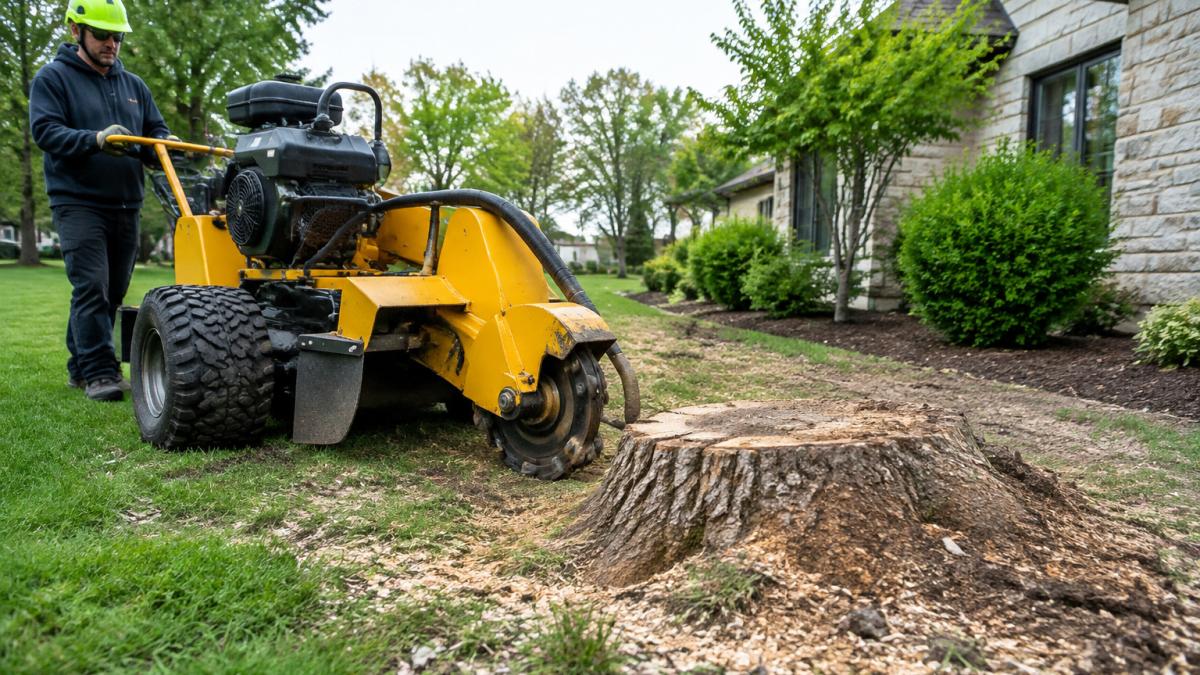
The true cost of removal includes the stump. Leaving a stump in place avoids the grinding fee but can attract pests, sprout new growth and block future planting. Grinding may be priced by stump diameter, and larger stumps generally require more work.
Stump Diameter | Typical Grinding Price Range |
Under 12 inches | $75-$150 |
12 to 24 inches | $150-$350 |
24 to 36 inches | $300-$500 |
Over 36 inches | $500+ |
Grinding depth matters too. A shallow grind leaves roots that can resprout; a deeper grind costs more but clears the way for replanting. Ask what depth the quote covers.
A Simple Break-Even Example
This is the comparison most articles skip. Suppose a healthy medium tree needs a maintenance trim every few years. Over 15 years that adds up to several trims. Now suppose the same tree is removed instead, with a one-time removal cost plus stump grinding. Compare the total cost of repeated trimming against a single removal quote to see which is cheaper over that period.
Change the assumptions and the answer can flip. The lesson is not that one option always wins; it is that the frequency of trimming and the size of the tree decide the math.
Key Takeaway Use this rule of thumb: multiply your quoted trim price by how many times you expect to trim over the years you plan to keep the tree. If that total approaches or exceeds a removal quote plus stump grinding, removal is the better financial call, provided the tree is not one you want to keep for shade, screening or curb appeal.
The Costs the Upfront Quote Hides
A fair lifetime comparison has to include the line items that show up later:
Corrective work after branch failure. A tree that drops a large limb may need emergency cleanup and repair, which can cost more than routine trimming.
Root and stump problems. Surface roots can crack driveways and interfere with sewer lines; a stump left in place can sprout and require herbicide or re-grinding.
Liability exposure. A failing tree near a structure carries risk that a healthy, well-maintained tree does not.
Replacement planting. Removing a tree means you may need to plant a new one if you want the canopy back.
Run the numbers for your specific tree, and get the removal quote in writing before you assume trimming is the cheaper path.
When Trimming Is Enough and When Removal Is Necessary
Trimming can work well when the tree is structurally sound and its problems are limited to crowded branches, low clearance or minor dead wood. Removal becomes the better choice when the tree is dead, heavily decayed, leaning dangerously or a constant risk to the home.

Watch for these warning signs that point toward removal:
Large dead branches or widespread dieback
Cracks, cavities or fungal growth at the trunk base
Significant lean that has changed recently
Roots damaging the foundation or sewer lines
A common mistake is trimming a tree that is already structurally failing. Pruning cannot fix a compromised trunk, and the money spent on repeated trimming may be wasted.
Watch out: storm-damaged trees can look fine from the ground while hiding split limbs or root damage. An on-site assessment is the only reliable way to tell whether a tree can be saved.
Scheduling an Estimate From Anderson Tree Care
Trimming and removal costs depend on the specific tree, its location and the scope of work, so the most accurate price comes from an on-site assessment. Anderson Tree Care provides estimates for residential trimming, removal and stump grinding, and our team can evaluate whether a tree is best served by trimming or removal. Contact us for current pricing and to schedule a visit.
Frequently Asked Questions
Is tree trimming more expensive than tree removal?
Usually not. Trimming typically costs less upfront because it involves cutting back branches rather than taking the whole tree down, rigging, and hauling away debris. However, repeated trimming every few years adds up, so the long-term comparison depends on the tree's health, size, and how often it needs attention. Ask for an itemized quote that separates labor, equipment, and debris removal so you can compare options directly.
How much does it cost to cut down a 40-foot tree?
The price of removing a 40-foot tree depends on access, proximity to structures or power lines, the tree's condition, and whether a crew must dismantle it in sections. The most reliable figure comes from a written estimate. Anderson Tree Care provides estimates by phone call or text, and the quote will reflect your specific tree and site.
Does tree removal cost include stump grinding?
Not always. Some quotes include stump removal to ground level, while others list it as a separate line item. Stump grinding is often priced by stump diameter or by the hour. Confirm whether the estimate covers grinding, debris cleanup, and haul-away before you sign, so there are no surprise charges after the job is finished.
When should a tree be trimmed instead of removed?
Trimming is usually the better choice when the tree is structurally sound, healthy, and has only deadwood, crossing limbs, or branches that interfere with the roof or power lines. Removal becomes the more practical option when the trunk is decayed, the tree leans toward a structure, or disease has spread through the canopy. A professional assessment can confirm which situation applies to your tree.

Comments