How to Prevent Tree Regrowth from Stump: 2026 Guide

Table of Contents
Why Stumps Regrow and How to Stop It
How to Stop a Tree Stump from Sprouting
Chemical Stump Killers: What Works
Epsom Salt and Other Home Remedies
Stump Grinding to Prevent Regrowth
How Deep Should Grinding Go?
What to Do with Stump Grindings
Using Grindings as Mulch
Composting Stump Grindings
How to Dispose of Tree Stump Grindings
Estimate the Volume Before You Decide
Compare Your Disposal Options
When Not to Spread or Compost
A Simple Decision Path
Fresh vs. Aged Grindings: Safety and Application
Restoring the Stump Site for Grass or Replanting
Step 1: Deal with the Grindings in the Hole
Step 2: Backfill and Compact in Layers
Step 3: Choose Turf or a Replacement Plant
Step 4: Watch for Regrowth and Settling
A Realistic Timeline
When to Call a Professional
Frequently Asked Questions
Last Updated: October 15, 2026
Why Stumps Regrow and How to Stop It
A stump keeps sprouting because the root system is still alive. This guide from Anderson Tree Care explains how to prevent tree regrowth from stump at the source.
The key fact most people miss: regrowth comes from stored energy in the roots, not the stump itself.
Trees that sucker aggressively include maples, willows, cottonwoods, elms, and many oaks. Species with strong root systems are the hardest to stop.
Prevent tree regrowth by doing one of three things:
Kill the stump with a labeled herbicide
Grind the stump well below ground level
Remove the stump and major roots entirely
Letting it sit and hoping it dies rarely works.
How to Stop a Tree Stump from Sprouting
To stop a stump from sprouting, treat the cut surface with a stump-killer product within minutes of cutting, or grind the stump below the soil line. Timing matters more than the product, freshly cut wood absorbs treatment best.
Follow these steps:
Cut the stump as low as possible with a clean saw.
Clear sawdust from the cut surface.
Apply herbicide to the outer ring of the cut within 30 minutes.
Wait for the stump to die back, usually several weeks.
Remove or grind the dead stump.
If the stump is already sprouting, cut the shoots and treat again. Persistence beats one heavy dose.
Watch Out Applying herbicide to a stump near a desirable tree can kill that tree too. Roots of nearby trees can graft together, so the chemical travels. Read the label and keep treatment away from valued plants.
Chemical Stump Killers: What Works
Herbicides labeled for stump treatment work when applied to a freshly cut surface. The active ingredient moves down into the roots and stops regrowth.
Apply the product to the cambium ring, the outer band of live tissue just under the bark.
Always follow the label directions and local rules. The EPA pesticide safety guidance explains how to handle and store these products safely.
Epsom Salt and Other Home Remedies
Epsom salt, rock salt, and vinegar are popular home remedies, but they rarely kill a stump.
Salt can also harm soil and nearby plants. It does not break down the way many people assume.
Drilling holes and filling them with salt may weaken a small stump over months, but it usually fails on large, vigorous stumps.
Stump Grinding to Prevent Regrowth
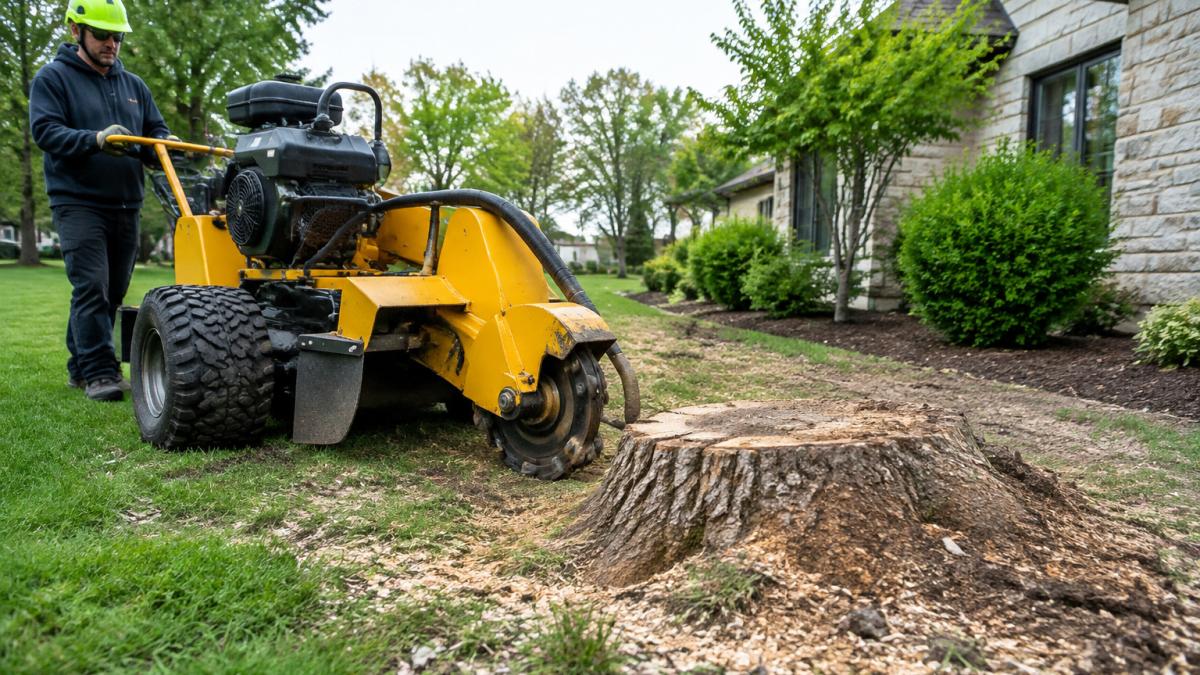
Stump grinding removes the wood below ground level, the most reliable way to prevent tree regrowth. A grinder chips the stump and surface roots into small pieces, leaving a hole filled with grindings.

Grinding also clears the area for new planting or a lawn. The catch is depth. Grind too shallow and some roots survive and sprout again.
How Deep Should Grinding Go?
Grind at least 6 to 12 inches below the soil surface to stop most regrowth; go deeper for aggressive species. Shallow grinding leaves roots that can send up shoots.
Depth depends on the tree:
Small ornamental trees: 6 inches is often enough
Medium trees: 8 to 12 inches
Large, vigorous species: 12 inches or more
A professional grinder reaches deeper than most rental units. That depth is what stops regrowth for good.
What to Do with Stump Grindings
Stump grindings are the wood chips left after grinding, and they have plenty of uses: mulch, compost, paths, or animal bedding. Reusing them saves hauling costs and puts the material to work on your property.
Here is a quick look at your options:
Use | Best For | Key Step |
Mulch | Garden beds, tree rings | Age first, then spread 2-3 inches |
Compost | Building soil over time | Mix with nitrogen-rich greens |
Paths | Walkways, garden trails | Tamp down, add edging |
Animal bedding | Coops, stalls | Use aged, dry chips only |
Using Grindings as Mulch
Stump grindings work as mulch once they age. Spread fresh chips too thick and they pull nitrogen from the soil as they break down, starving plants.
Let grindings sit in a pile for a few months, then spread a 2 to 3 inch layer.
Keep mulch a few inches away from trunks. Piling it against bark traps moisture and invites rot.
Composting Stump Grindings
Grindings compost well, but as a carbon-rich material they need nitrogen-rich material to break down. Layer them with grass clippings, kitchen scraps, or manure.
Turn the pile every few weeks and keep it as damp as a wrung-out sponge. Decomposition takes months to a year; the finished compost adds organic matter and nutrients to garden beds.
Pro Tip Grindings from diseased trees should not go in your compost or garden. The disease can spread to healthy plants. Send that material to a proper disposal site instead.
How to Dispose of Tree Stump Grindings
To dispose of tree stump grindings, choose one of four routes: reuse on site, compost, give away, or haul to a yard waste site. The right choice depends on volume, urgency, and whether the wood is clean or contaminated.
Estimate the Volume Before You Decide
Most homeowners are surprised by how much material a stump produces. A useful rule of thumb: a grinder leaves roughly 1 cubic yard of grindings for every 10 to 12 inches of stump diameter, assuming 6 to 12 inches of grinding depth.
Measure the pile before you commit to a plan: length x width x average height in feet, divided by 27, gives cubic yards. A pile 6 feet long, 6 feet wide, and 2 feet tall is about 2.7 cubic yards.
Compare Your Disposal Options
Leave and reuse on site. Lowest cost, no hauling. Best when you have garden beds, paths, or a compost pile that can absorb the material. Requires aging before most uses.
Give them away. Post on a neighborhood group or a local garden exchange. Free material moves fast, but you may need to load it yourself, and some takers back out once they see the volume.
Municipal yard waste or green-waste facility. Many cities accept clean wood chips and grindings, often free or for a small fee. Call ahead, some sites only accept brush and limbs, not chips, and some limit loads to residential quantities.
When Not to Spread or Compost
Grindings from a tree that was diseased, infested, or treated with a persistent herbicide should not be spread around healthy plants or added to compost. Bag the material or send it to a commercial facility that handles green waste at higher temperatures than a backyard pile reaches.
Pro Tip If you are unsure whether the wood is safe, keep it out of vegetable beds and away from the root zones of desirable trees and shrubs. Use it for a path, a parking pad, or a low-traffic area instead.
A Simple Decision Path
Estimate volume in cubic yards.
Confirm the wood is clean (no disease, pests, or herbicide history).
If clean and you have a use, pile it to age.
If clean but you have no use, offer it locally before paying to haul it.
If contaminated or the volume is large, contact your municipal yard waste program or a hauling service.
Knowing the volume up front keeps you from being buried by a pile you did not plan for.
Fresh vs. Aged Grindings: Safety and Application
Fresh grindings are not ready for most garden uses. As they decompose, they can tie up nitrogen and release compounds that slow plant growth.
Let fresh grindings age in a pile for several months, turning it to speed decomposition. Once the material darkens and breaks down, it is ready to use.
Wood species matter too. Black walnut releases a compound that can harm certain plants, so keep walnut grindings away from sensitive garden beds (Plants that inhibit other plants | ILRiverHort | Illinois Extension).
Restoring the Stump Site for Grass or Replanting
Restoring the stump site starts with the grinding hole, the part most people get wrong. Grindings settle for months, so a hole filled to grade in spring can leave a dip by fall. Plan for that settling before you seed or plant.
Step 1: Deal with the Grindings in the Hole
You have two workable approaches:
Remove them. Haul the grindings out and backfill with topsoil. This gives the most predictable result for turf and for a replacement tree, because you control what the roots will grow into.
Mix and cap. Mix some grindings into the native soil to fill the lower portion of the hole, then cap with 4 to 6 inches of topsoil. Cheaper and less labor, but the wood continues to decompose and the surface will sink. Expect to top-dress the area for a season or two.
Either way, do not plant directly into pure grindings. Fresh wood ties up nitrogen as it breaks down, and a seedling or sod plug started in straight chips struggles.
Step 2: Backfill and Compact in Layers
Fill the hole in 6-inch layers, watering and tamping each lightly. Over-compacting creates a hard pan roots cannot penetrate, so firm the soil without packing it like concrete. Bring the surface 1 to 2 inches above grade to allow for settling.
Step 3: Choose Turf or a Replacement Plant
For grass: Spread 4 to 6 inches of topsoil, rake it level, and seed with a mix suited to your region and sun exposure.
For a replacement tree or shrub: Wait if you can. Old roots from the removed tree decay over several years, and fresh roots can harbor the same soil-borne diseases that affected the original tree.
Step 4: Watch for Regrowth and Settling
Even after grinding, small roots near the surface can push up shoots. Check monthly for the first growing season and cut any shoots at or below the soil line. Re-level sunken spots with topsoil and re-seed as needed.
Key Takeaway Restoring the site is a soil problem before it is a planting problem. Get the backfill, settling allowance, and topsoil cap right, and turf or a replacement tree has a real chance. Skip those steps and you will be patching a sinking, nitrogen-starved patch for years.
A Realistic Timeline
Day 1: Remove or mix grindings, backfill in layers, cap with topsoil.
Week 1: Seed or sod; begin watering schedule.
Weeks 4-6: First mowing for turf; check for shoot regrowth.
When to Call a Professional
Call a professional when the stump is large, near a structure, or keeps sprouting after treatment.
At Anderson Tree Care, our family-owned team has over a decade of experience with stump grinding and tree removal.
A pro can also tell you whether grinding, herbicide, or full removal is the right call for your tree species and yard.
Frequently Asked Questions
Will grinding a stump prevent it from growing back?
Grinding removes the visible stump but does not always kill the root system. To prevent regrowth, grind at least 6 to 12 inches below ground level and monitor the area for suckers. For species that sprout aggressively, such as willow or poplar, you may need to apply a stump killer to the remaining roots or have a professional assess the site.
How do I stop a tree stump from sprouting without chemicals?
You can stop a tree stump from sprouting by depriving it of light and nutrients. Cover the stump with a thick black plastic tarp weighted down for several months, or cut away any new shoots as soon as they appear. Another option is to drill holes in the stump and fill them with Epsom salt, then cover with soil. Persistence is key, as some roots can survive for years.
What can I do with the wood chips after stump grinding?
Stump grindings can be reused as mulch around trees and shrubs, added to compost piles as a carbon source, spread on garden paths, or used as animal bedding. Fresh grindings should be aged for a few months before using them near young plants, because they can temporarily tie up nitrogen in the soil. If you have excess material, you can haul it to a local yard waste facility.
Do I need to remove the roots to prevent regrowth?
Not always. Grinding the stump 6 to 12 inches below grade and treating any remaining roots with a herbicide or salt can stop most regrowth. However, for trees that spread aggressively by root suckers, such as black locust or tree of heaven, complete root removal may be necessary. A professional can evaluate the species and site to recommend the best approach.
Stopping regrowth for good comes down to killing the roots or removing them, not just cutting what you see. If you want the stump gone and the site ready for grass or new plantings, Anderson Tree Care can help. Our team brings over a decade of experience, full insurance and licensing, and a focus on protecting your property. Call or text us for an estimate and get your yard back.
Call or Text for estimate

Comments