Tree Removal Services Iowa: 2026 Guide

Table of Contents
How to Know When Tree Removal Services Are Necessary Signs a Tree Is a Hazard to Your Property DIY vs. Professional Risk Assessment
Signs a Tree Is a Hazard to Your Property
DIY vs. Professional Risk Assessment
ISA Certified Arborist Benefits for Iowa Homeowners
Emergency Tree Removal Cost: What Drives the Price Factors That Affect Your Tree Removal Quote
Factors That Affect Your Tree Removal Quote
Stump Grinding Services: Why the Job Isn't Done at the Cut
Tree Trimming, Pruning, and Canopy Management
Permits, Local Regulations, and Tree Removal Liability
Seasonal Tree Care Calendar for Iowa Properties
Choosing the Right Tree Removal Services in Iowa Wood Disposal and Recycling Options After Removal
Wood Disposal and Recycling Options After Removal
Last Updated: August 17, 2026
How to Know When Tree Removal Services Are Necessary
Tree removal services are not a decision to make lightly. A dying oak near your roofline or a storm-split trunk leaning toward your fence deserves a professional assessment before the next severe weather event forces your hand. Most homeowners don't call for help until the situation is critical. Recognizing warning signs early is how you avoid emergency pricing and structural damage.
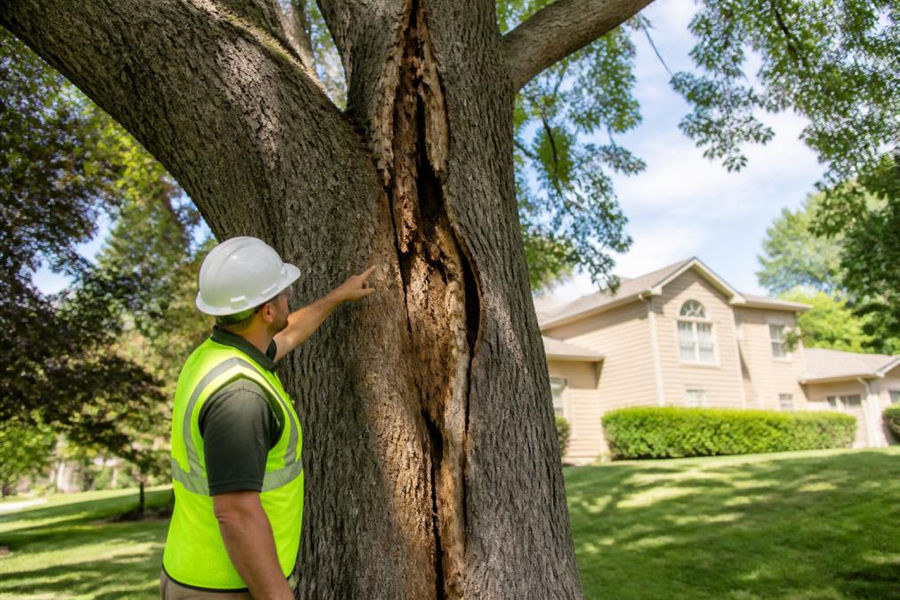
Signs a Tree Is a Hazard to Your Property
A hazard tree poses an unreasonable risk of failure under normal or storm conditions. Watch for these indicators:
Significant lean: A tree that has shifted its lean angle recently, especially after rain or wind, signals root instability.
Visible trunk cracks or cavities: Deep splits, hollow sections, or fungal growth at the base indicate internal decay.
Deadwood in the canopy: Large dead branches overhead are unpredictable and don't need a storm to fall.
Root damage: Heaving soil around the base, severed roots from construction, or mushroom growth near the root collar point to compromised structural integrity.
Multiple trunk failure: Co-dominant stems with tight V-shaped unions are prone to splitting under load.
Any single one of these warrants a professional tree inspection. Several together make removal likely.
DIY vs. Professional Risk Assessment
DIY tree work is reasonable for small ornamental trees under 15 feet, pruning branches under 2 inches in diameter from the ground, and removing saplings with no overhead hazards.
Professional tree removal is necessary when the tree is taller than one story, within striking distance of a structure or utility line, shows hazard signs, or the terrain makes safe felling impossible. According to the U.S. Consumer Product Safety Commission, chainsaw-related injuries send tens of thousands of people to emergency rooms each year. The cost of a professional crew is a fraction of what an ER visit, a damaged roof, or a liability claim will cost.
Watch Out Never attempt to remove a tree that is leaning toward a structure, touching a utility line, or showing signs of root failure. These situations require trained professionals with the right equipment. A tree that appears stable can fail without warning once cutting begins.
ISA Certified Arborist Benefits for Iowa Homeowners
An ISA certified arborist is a tree care professional who has passed a rigorous examination administered by the International Society of Arboriculture and maintains certification through ongoing education. ISA certification is the most widely recognized credential in the arboriculture industry.
For homeowners, hiring an ISA certified arborist means the person assessing your trees understands tree biology, hazard identification, proper pruning standards, and safe removal practices. The practical benefits include accurate hazard assessment that distinguishes between a tree that looks bad and one that is actually dangerous, proper pruning technique that prevents disease entry points, written documentation for insurance claims, and long-term tree health planning. Iowa's mature tree canopy of oaks, elms, and silver maples benefits enormously from professional management. Many trees homeowners assume need removal can be preserved with the right intervention.
Emergency Tree Removal Cost: What Drives the Price
Emergency tree removal cost is higher than standard removal because it requires immediate mobilization, often after-hours response, and work in inherently more dangerous conditions. Pricing depends on a combination of factors rather than a flat rate.
Factors That Affect Your Tree Removal Quote
Factor | Impact on Cost | Notes |
Tree size (height and trunk diameter) | High | Larger trees require more labor and equipment time |
Proximity to structures | High | Tight spaces require rigging, slower work, and more risk |
Emergency vs. scheduled service | High | After-hours and storm-response calls carry a premium |
Number of trees | Moderate | Multiple removals on one visit can reduce per-tree cost |
Stump grinding inclusion | Moderate | Often quoted separately; ask upfront |
Debris removal and site cleanup | Moderate | Some crews haul everything; others leave logs for you |
Access for equipment | Moderate | Limited access for a bucket truck or chipper adds time |
Permits required | Low to moderate | Permit fees vary by municipality |
Request a written tree removal estimate from a licensed and insured professional before any work begins. A reputable company will walk the property, assess specific conditions, and provide a detailed quote.
Pro Tip Ask every company whether their quote includes debris removal and stump grinding. Many low-ball estimates exclude both, and the final invoice can look very different from the agreed number.
Stump Grinding Services: Why the Job Isn't Done at the Cut
Stump grinding is not optional maintenance. A stump left in place becomes a breeding ground for wood-boring insects and fungal disease that can spread to healthy trees nearby. It is a tripping hazard and lawnmower obstacle. If the species sends up root sprouts, you will fight regrowth for years.
Stump grinding uses a rotating cutting wheel to grind the stump and surface roots below grade, typically 6 to 12 inches deep. The result is wood chips that can be used as mulch, and a level surface for replanting or sodding.
Before scheduling stump grinding, remember that utility marking is required, call 811 before any ground disturbance. Root spread matters; deeper roots will decay naturally over time. Scheduling stump grinding at the same time as tree removal is almost always more cost-effective than returning separately. According to Iowa State University Extension and Outreach on tree care, proper site cleanup after removal reduces the risk of secondary pest and disease problems in the surrounding landscape.
Tree Trimming, Pruning, and Canopy Management
Proper tree trimming and pruning improve tree structure, remove deadwood, reduce wind resistance, and extend productive life by decades. Canopy management is the broader practice of shaping a tree's overall structure over time.

The most common pruning mistakes are topping (cutting main stems back to stubs, which destroys natural form and creates weak sprouts), flush cuts (removing the branch collar, which slows wound closure), and over-pruning (removing more than 25 percent of live canopy in one season). A licensed tree care professional follows the International Society of Arboriculture's pruning guidelines, which specify cut placement, timing by species, and maximum removal percentages.
Key Takeaway Tree trimming done right is an investment in your property. Tree trimming done wrong accelerates decline, creates hazards, and costs more to fix than doing it correctly the first time.
Permits, Local Regulations, and Tree Removal Liability
Permit requirements vary by municipality. Some cities regulate removal of trees above a certain trunk diameter, trees in the public right-of-way, or trees within designated tree preservation zones. Checking with your city's public works or community development department before removing a significant tree is the right first step.
If a tree on your property falls and damages a neighbor's structure, you may be liable if you knew, or reasonably should have known, the tree was hazardous. A documented tree inspection by a certified arborist, combined with prompt action on identified hazards, is your best legal protection. Trees in the public right-of-way are typically owned by the municipality. Pruning or removing these trees without city authorization can expose you to liability. Working with a licensed and insured tree removal professional protects you on both ends: the work is done to code, and the company carries liability insurance.
Seasonal Tree Care Calendar for Iowa Properties
Iowa's climate creates distinct seasonal pressures on trees. A basic annual care calendar helps homeowners stay ahead of problems.
Winter (December - February): The dormant season is ideal for structural pruning of deciduous species. Frozen ground reduces compaction from equipment.
Spring (March - May): Avoid heavy pruning of oaks from April through June. Oak wilt, a serious fungal disease spread by sap beetles, is most active during this window.
Summer (June - August): A good time for professional tree inspection. Trees under stress show symptoms most clearly in full leaf. Summer is also when storm damage peaks in Iowa.
Fall (September - November): Avoid major pruning in early fall, as it can stimulate new growth that won't harden before winter. Late fall, after leaves drop, is acceptable for light structural work.
Choosing the Right Tree Removal Services in Iowa
The right tree removal services provider is not simply the lowest bid. It is a licensed and insured professional with the equipment, credentials, and track record to do the work safely and completely.
Before hiring any tree care company, verify proof of current liability insurance and workers' compensation coverage, ask whether the company employs ISA certified arborists, get everything in writing including what is and is not included, ask for local references, and confirm that full payment is not required upfront.
Anderson Tree Care is a family-owned business with over a decade of experience serving West Des Moines and surrounding communities. The company is fully insured and licensed, specializes in residential tree services, and prioritizes safety and property protection on every job.
Wood Disposal and Recycling Options After Removal
Common disposal and recycling options include chipping branches and smaller material into mulch, cutting large trunk sections for firewood, full haul-away for a completely cleared site, or donation to municipalities and community organizations. Ask your tree removal professional what disposal options are included in the quote and what additional charges apply for haul-away.
According to the USDA Forest Service urban and community forestry program, recycling wood material from tree removal back into the landscape as mulch improves soil moisture retention and reduces the need for supplemental irrigation, making it one of the most practical sustainability choices a homeowner can make.
Frequently Asked Questions
How much does tree removal cost in Iowa?
Tree removal pricing depends on several factors: the tree's height and trunk diameter, its proximity to your home or power lines, the complexity of the job, and whether stump grinding is included. A small ornamental tree costs far less than a 60-foot oak near a foundation. Because no two jobs are identical, the most reliable way to get an accurate number is to request a free on-site estimate from a licensed and insured tree removal professional before committing to any work.
Do I need a permit to remove a tree on my property in Iowa?
Permit requirements vary by municipality. Many Iowa cities and suburban communities have tree ordinances that protect certain species, heritage trees, or trees within public right-of-way areas. Removing a regulated tree without a permit can result in fines. Before scheduling removal, check with your local city or county planning department. A qualified arborist familiar with local regulations can also advise you on what approvals are needed for your specific property and tree.
Who is responsible if a neighbor's tree falls on my house in Iowa?
Iowa generally follows the legal principle that a property owner is liable for tree damage when they knew, or should have known, the tree was diseased, dead, or otherwise hazardous. If a healthy tree falls due to a storm, the homeowner whose property was damaged typically files a claim with their own homeowner's insurance. Documenting tree health with a professional inspection report from an ISA certified arborist strengthens any insurance or liability claim significantly.
What are the benefits of hiring an ISA certified arborist?
An ISA certified arborist has passed rigorous exams administered by the International Society of Arboriculture and must complete continuing education to maintain certification. For homeowners, that means you get a professional who can accurately diagnose tree health problems, recommend removal only when truly necessary, and perform work according to established safety standards. Certification also signals the arborist carries proper insurance and understands tree biology, reducing the risk of property damage or costly mistakes during removal or pruning.
Mature trees near your home are an asset and a responsibility. When they become hazardous, the cost of waiting almost always exceeds the cost of acting. Anderson Tree Care brings over a decade of experience, full insurance coverage, and a genuine commitment to safety to every job in West Des Moines and the surrounding area. Whether you need an emergency assessment, scheduled removal, stump grinding, or a full seasonal pruning program, call or text Anderson Tree Care for an estimate.
Call or Text for estimate


Comments